Posts

12 Years a Slave Essay: To what extent can you learn about history through watching a movie?
Image
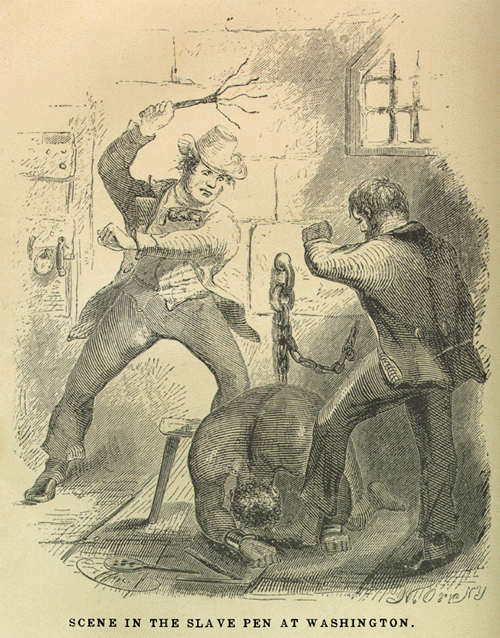
After watching and researching 12 Years a Slave , I believe it is very possible to learn about history from watching a movie as I saw certain experiences of slaves in the movie which were also written about in the narratives. Specifically, I believe this as Solomon’s abduction into slavery is accurately represented in the movie as he describes in his narrative. This was something that I first saw in the movie and did not know would actually happen, where a free person was taken down south into slavery. After researching and analyzing Solomon’s narrative as well, I just have more words to put behind the pictures I saw in the film. It was very accurate down to the gruesome images of being whipped continually. After reading reviews and interviews about the movie, it’s obvious that 12 Years a Slave was intended to accurately represent the life of a slave. Graham Fuller in Vanity Fair writes of the incredibly vivid portrayal of Solomon Northup by Chiwetel Ejiofor through Steve McQueen...

Slave Narrative Research

    After reading some of Solomon Northup's narrative , I have gained some more detailed insight into his life as a slave. His history is interesting as his family was slave as well, though in Rhode Island in the past. One person from his family left and moved to New York, bringing with them Solomon's father, Mintus. As Solomon was raised in freedom by his father being the first in his family, he still ends up being a salve at some point being kidnapped. This was so interesting and heartbreaking, gaining a further knowledge of how the lives of slaves can vary from when they were born to their time as slaves. This makes me wonder: how often would such scenarios happen, where a free African American is just kidnapped brought down to the South? I had never really thought of such things happening before this movie and seeing his narrative just makes it even more real and shows the entirety of the horrible situation. I wonder if Solomon had ever any opportunity of writing back to h...

Self Assessment

So far in US History, I believe I have made good progress in understanding key points in our countries past. We have not only set a good foundation of the historical content part of class with our start to the year, but also with the important skills we need in order to do specific activities throughout the year. We have learned how to paraphrase in contrast to summarizing and quoting which is very important in general for research. We have learned about the concept of empathy where one can relate to how someone is feeling about something in contrast to sympathy. I enjoy studies of psychology and choices as well where the actions among feelings of people are put into perspective. I look forward to learning more of the role of the United States in the World Wars after seeing how the Civil War played out. I anticipate seeing how the Civil War plays a part going forward with such historical events like the World Wars. I also look forward to seeing more of the great depression from an econ...

Reflection on Paraphrase Practice

From our practice of paraphrasing I have learned the specific differences between summaries, paraphrases, and quotations: summaries being shorter more related to the main points of something compared to paraphrases which is just restating it in your own words but with all of the details still there. Quotations, on the other hand, are just saying word-for-word what the original states. They are used as evidence and are put in the correct format giving direct credit to the person who wrote it. All of this information is very important as we must know the difference between these so that we can do the research and work in class without breaking the honor code. It is important to know when to use each of these and how to cite where it come from. This is what I learned today. Only use a direct quote when it adds power and style to my writing. Always make it clear, from context, that I understand the full meaning of the quote. Whether I quote or paraphrase, I must always be transparen...

Practicing Incorporating a Quotation

The movie "Lincoln" was a very well illustrated and performed film by many talented actors. Daniel Day-Lewis, who plays the role of Lincoln, does an incredible job of portraying the many physical qualities of Lincoln that makes him so uniques: "His reedy-pitched voice reflects the numerous descriptions of Lincoln’s voice which described it as a tenor, with almost squeaky accents. He walks flat-footedly, as Lincoln did, wraps himself in a shawl, features only a tuft of beard at his chin... " I agree with this reflection that Guelzo has here where he shows just how accurate one can be when portraying such a unique historical figure. Day-Lewis deserves a tremendous amount of the credit in this movie as he gives off such a realistic atmosphere. Article: http://www.thedailybeast.com/a-civil-war-professor-reviews-lincoln 

Paraphrase Practice

Original  Article Passage on DailyBeast by Allen Guelzo (Civil War professor) “It is on Lincoln himself that the most demanding historical exactness is fitted. And Day-Lewis wears it uncommonly well. His reedy-pitched voice reflects the numerous descriptions of Lincoln’s voice which described it as a tenor, with almost squeaky accents. He walks flat-footedly, as Lincoln did, wraps himself in a shawl, features only a tuft of beard at his chin (the luxuriant chin-whiskers of his early presidency had been shaved-down by the time of the movie’s events, in 1865), and quotes Shakespeare between off-color stories.” Paraphrase Day-Lewis exceptionally portrays Lincoln’s unique and significant roles in history. The many physical similarities that he possessed, such as his delicate, tenor voice, flat-footed walk, signature shawl, ruff beard, and common shakespeare quoted fables, played a great part in this intricate representation. Revised Paraphrase Lincoln's unique role in...

USH Letter Research

Image
The theme of the letters I chose is soldiers, as these letters are going back to family of the soldier writing them giving updates and express the love and longing to be together again. Four of the letters were written by Private Dirk Keppel of the Union, who was Killed in Action on April 16, 1862 at Wilmington Island, GA. On September 22, 1861, Keppel writes to his brother whom is updating of his status in battle and introducing his letters with his purchase of a pen and ink pot. He writes about causal subjects of the uniforms, food, and boats he sees passing by, as if he was with his brother in the moment. On September 26, 1861, Keppel writes to his parents also just informing them of what has been going on with his daily life in the war. He writes of his satisfaction and health as a soldier, the war’s effect on his religion, musicians he has been experiencing, training, and clothing as they must have been worried of his safety and well-doing. On November 18, 1861, Keppel writes to ...